
AMD Ryzen Threadripper 1950X Full Specifications
The AMD Ryzen Threadripper 1950X is a Server processor with 16 cores, launched in 2017. It is part of the Ryzen Threadripper lineup, using the Zen architecture with Socket sTR4. The core-count is effectively doubled, to 32 threads. Ryzen Threadripper 1950X has 32MB of L3 cache and operates at 3.4 GHz by default, but can boost up to 4 GHz, depending on the workload. AMD is building the Ryzen Threadripper 1950X on a 14 nm production process. You may freely adjust the unlocked multiplier on Ryzen Threadripper 1950X, which simplifies overclocking greatly, as you can dial in any overclocking frequency up to 4.1GHz. With a TDP of 180 W, the Ryzen Threadripper 1950X consumes a lot of power, so good cooling is definitely needed. AMD's processor supports DDR4 memory with a dual-channel interface. It is worth noting that this processor does not have integrated graphics. This processor can run on motherboards with the following chipsets: X399.
AMD Ryzen Threadripper 1950X General
| Foundry | GlobalFoundries |
|---|---|
| Manufacturer | AMD |
| Codename | Zen |
| Core Family | Whitehaven |
| Market | Desktop |
| Series | AMD Threadripper |
| Type | Desktop |
| Architecture | Zen |
| Achitecture codename | ZEN |
| Microarchitecture | Zen |
| Market price | $ 999 |
| Production Status | Active |
| Release date | on August 2017 |
| Released | Aug 2017 |
| Launch price (MSRP) | $999 |
| Price now | $653 |
| Place in performance rating | 57 |
| Value for money (0-100) | 10.05 |
| Manufacturing process technology | 14 nm |
| Process Size | 14 nm |
AMD Ryzen Threadripper 1950X Compatibility
| Power consumption (TDP) | 180 Watt |
|---|---|
| Max number of CPUs in a configuration | 1 (Uniprocessor) |
| Max number of PCIe lanes | 60 |
| PCIe lanes | 64 |
| PCIe revision | 3.0 |
| PCIe version | 3.0 |
| Socket | sTR4 |
AMD Ryzen Threadripper 1950X Benchmarks
| # of Cores | 16 |
|---|---|
| # of Threads | 32 |
| Base Clock | 100 MHz |
| Boost Clock | 4 GHz |
| CPU Cores | 16 |
| CPU Threads | 32 |
| Cache L1 | 96K (per core) |
| Cache L2 | 512K (per core) |
| Cache L3 | 32MB |
| Core Clock | 3.4 GHz |
| Core Count | 16 |
| Frequency | 3.40 GHz |
| Hyperthreading | Yes |
| L1 Cache | 16 x 64 kB Instruction 16 x 32 kB Data |
| L1 cache | 96K (per core) |
| L2 Cache | 16 x 512 kB |
| L2 cache | 512K (per core) |
| L3 Cache | 1 x 32 MB |
| L3 cache | 32 MB |
| L3-Cache | 32.00 MB |
| Maximum frequency | 4.2 GHz |
| Simultaneous Multithreading | Yes |
| TDP | 180 W |
| TDP down | -- |
| TDP up | -- |
| Turbo (1 Core) | 4.00 GHz |
| Turbo (16 Cores) | 3.50 GHz |
| Turbo Clock | up to 4 GHz |
AMD Ryzen Threadripper 1950X Memory Specifications
| ECC | Yes |
|---|---|
| ECC Support | Yes |
| ECC memory support | + |
| Max memory channels | 4 |
| Maximum Supported Memory | 1024 GB |
| Maximum memory bandwidth | 79.47 GB / s |
| Maximum memory size | 2 TiB |
| Memory Support | DDR4 |
| Memory channels | 4 |
| Memory type | DDR4-2666 |
| Supported memory types | DDR4-2666 |
| Max. Memory |
AMD Ryzen Threadripper 1950X Technical Specs
| 64 bit support | + |
|---|---|
| Die Size | 213 mm² |
| Die size | 213 mm2 |
| Includes CPU Cooler | No |
| Maximum core temperature | 68 °C |
| Multiplier | 34.0x |
| Multiplier Unlocked | Yes |
| Number of cores | 16 |
| Number of threads | 32 |
| Overclocking | Yes |
| Package | FCLGA-4094 |
| Part # | YD195XA8AEWOF |
| Part# | YD195XA8UGAAE |
| SMP # CPUs | 1 |
| Technology | 14 nm |
| Tjunction max. | -- |
| Transistor count | 9600 million |
| Transistors | 9600 million |
| Unlocked | + |
| Voltage | variable |
| tCaseMax | unknown |
AMD Ryzen Threadripper 1950X Integrated Graphics
| DirectX Version | |
|---|---|
| Execution units | |
| GPU (Turbo) | No turbo |
| GPU frequency | |
| Generation | |
| Integrated Graphics | None |
| Integrated graphics | - |
| Lithography | 14 nm |
| Max. displays | 0 |
AMD Ryzen Threadripper 1950X Technologies and Extensions
| AES-NI | + |
|---|---|
| AVX | + |
AMD Ryzen Threadripper 1950X Virtualization Technologies
| AMD-V | + |
|---|---|
| Virtualization | AMD-V, SEV |
AMD Ryzen Threadripper 1950X Other
| Packaging | Boxed |
|---|---|
| MMX SSE SSE2 SSE3 SSSE3 SSE4A SSE4.1 SSE4.2 AES AVX AVX2 BMI1 BMI2 SHA F16C FMA3 AMD64 EVP AMD-V SMAP SMEP SMT Precision Boost XFR |
Intel Vs AMD: Which CPU is Best?
Jul 12, 2020 - A rivalry for the ages, and a question often asked and wondered about. Whenever you want to build or upgrade your PC, you have to make a decision: Buy an Intel or AMD processor?
Impact of RAM Size and Speed on Gaming Benchmarks
Jul 5, 2020 - Does RAM size and speed affect your gaming performance? should you invest in a high performance RAM kit? Find out here.

Who Is Lilith and What Terrifies Us About This Diablo Demon?
Jul 24, 2023 No evil entity is more scary than Lilith herself, shrouded in darkness.
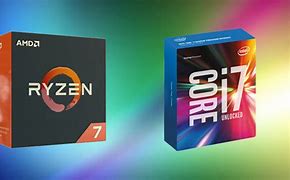
Why You Should Always Buy a Mid-to-High-Range Gaming PC?
Jun 23, 2020 - Mid- and high-range builds perform very well for their price, and are better than the entry-level in terms of power, longevity, and reliability, and they offer more bang for your buck especially when looking at their price-by-year advantage.
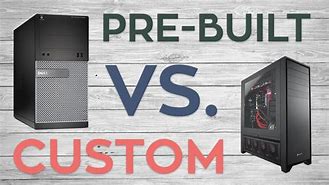
Should you buy a Pre-Built PC or a Custom PC?
Jun 11, 2020 - Pre-built systems are an attractive option for those who are less concerned with the minute details of every component in their build. Building your own PC is the best solution for those who want full control over every aspect of their build. It provides the most thorough customization options, from the CPU to the fans and lighting.

How to use CPUAgent To Find The Right CPU
Jun 2, 2020 - How to find the Right CPU? Whether you’re building or upgrading a PC, the processor matters a lot. CPUAgent is the right tool to help you find and choose the right CPU for your needs.
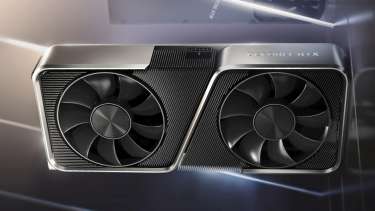
RTX 3070 with 10600k vs 3700x Bottleneck Comparison
Sep 03, 2020 - Save your CPU money and invest it in a powerful GPU instead. So, which affordable yet powerfulrt CPU strikes the best performance-price balance with the NVIDIA RTX 3070?

10600K vs 3600X: Battle of the mid-range CPUs
May 23, 2020 - The best performance to price value mid-range cpus are here. Find out more in this comprehensive review and summary of the Core i5-10600K vs Ryzen 5 3600X's capabilities.

10700K vs 3700X: Specs, 80+ Game Benchmarks, Bottleneck, and Streaming Analysis
May 22, 2020 - Which one is worth it, Core i7-10700K or Ryzen 7 3700X? Find out in this comprehensive review and summary of the Core i7-10700K vs Ryzen 7 3700X's capabilities.

10900K vs 3900X: Specs, 80+ Game Benchmarks, Bottleneck, and Streaming Analysis
May 21, 2020 - 10 cores vs 12 cores. Top-of-the-line very high-end cpus duke it out.
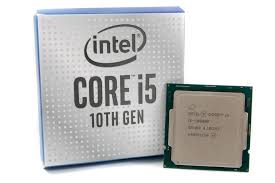
2500K vs 3570K vs 4670K vs 6600K vs 7600K vs 8600K vs 9600K vs 10600K: Should you consider upgrading?
May 21, 2020 - In this massive comparison across 8 generations of Intel Core i5 series CPUs, we explore the performance improvements by generation and whether it is reasonable or not to upgrade to Intel's latest.